

California SB 574: What Lawyers Need to Know About the New AI Law in 2027
California’s new law does not prohibit lawyers from using generative AI. It raises the bar for how they use it—and puts human judgment, verification, and accountability firmly at the center of legal practice. Generative AI is rapidly becoming part of everyday legal work. Attorneys are using it to research legal

How to Safely Use AI Notetakers in Your Law Firm
AI notetakers are becoming common in client meetings, capturing conversations, generating summaries, and saving attorneys valuable time. But what happens when sensitive client discussions are recorded without everyone’s consent? Who controls the transcripts, and could they become discoverable?
Who Owns AI in Law Firm Marketing and Client Intake?
A prospective client visits your firm’s website at 9 p.m. and starts interacting with an AI intake assistant. It asks what happened. It collects names, dates, and other details. It summarizes the matter and explains what will happen next. No lawyer has reviewed the exchange. No conflicts check has been
Responsible AI for Law Firms: 5 Questions Partners Must Answer Now
Nearly seven in ten legal professionals now use general-purpose generative AI tools for work—more than double the previous year’s rate. Yet only 9% of law firms report having an AI policy that is actively enforced, while 43% have no policy and no plans to create one. That gap between individual
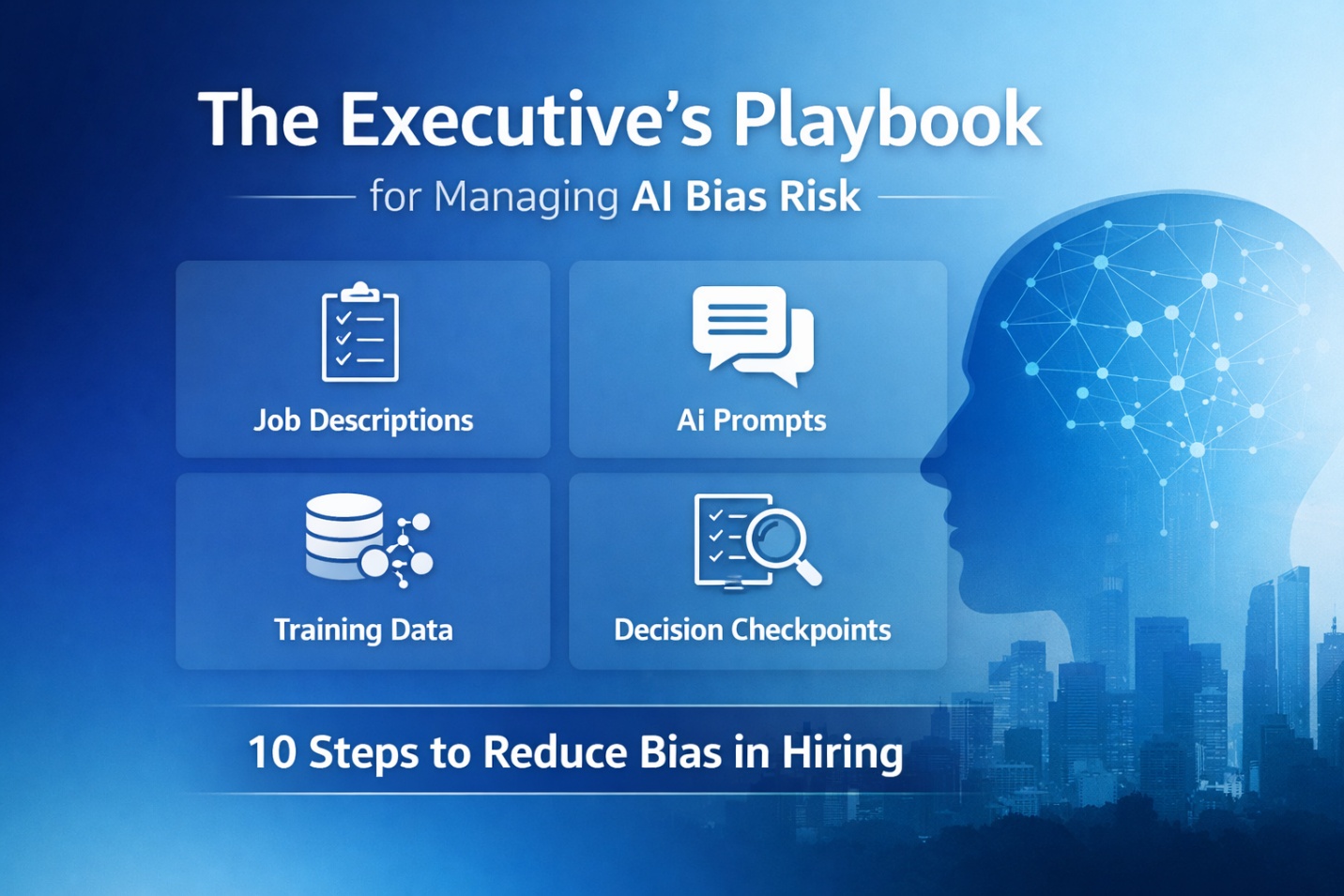
The Executive’s 10-Step Playbook for Managing AI Bias Risk
Reducing Bias in Hiring Workflows to Lower Compliance Risk . Artificial intelligence is now embedded across hiring workflows—from resume screening to candidate evaluation and ranking. As adoption increases, so does exposure to bias-related risks. Bias rarely surfaces during controlled testing. It becomes visible when outcomes diverge, candidates raise concerns, or decisions
AI for Personal Injury Lawyers: 5 Practical Workflows to Save Hours Per Case (2026 Guide)
Personal injury law has always been a high-effort, document-heavy practice. Between medical record reviews, demand drafting, and intake analysis, attorneys and paralegals often spend 20–40 hours per case on administrative work alone. The firms pulling ahead in 2026 are not working harder.They are using AI to compress that workload into
California SB 574: What Lawyers Need to Know About the New AI Law in 2027
California’s new law does not prohibit lawyers from using generative AI. It raises the bar for how they use it—and puts human judgment, verification, and accountability firmly at the center of legal practice. Generative AI is rapidly becoming part of everyday legal work. Attorneys are using it to research legal
How to Safely Use AI Notetakers in Your Law Firm
AI notetakers are becoming common in client meetings, capturing conversations, generating summaries, and saving attorneys valuable time. But what happens when sensitive client discussions are recorded without everyone’s consent? Who controls the transcripts, and could they become discoverable?
Who Owns AI in Law Firm Marketing and Client Intake?
A prospective client visits your firm’s website at 9 p.m. and starts interacting with an AI intake assistant. It asks what happened. It collects names, dates, and other details. It summarizes the matter and explains what will happen next. No lawyer has reviewed the exchange. No conflicts check has been
Responsible AI for Law Firms: 5 Questions Partners Must Answer Now
Nearly seven in ten legal professionals now use general-purpose generative AI tools for work—more than double the previous year’s rate. Yet only 9% of law firms report having an AI policy that is actively enforced, while 43% have no policy and no plans to create one. That gap between individual
The Executive’s 10-Step Playbook for Managing AI Bias Risk
Reducing Bias in Hiring Workflows to Lower Compliance Risk . Artificial intelligence is now embedded across hiring workflows—from resume screening to candidate evaluation and ranking. As adoption increases, so does exposure to bias-related risks. Bias rarely surfaces during controlled testing. It becomes visible when outcomes diverge, candidates raise concerns, or decisions
AI for Personal Injury Lawyers: 5 Practical Workflows to Save Hours Per Case (2026 Guide)
Personal injury law has always been a high-effort, document-heavy practice. Between medical record reviews, demand drafting, and intake analysis, attorneys and paralegals often spend 20–40 hours per case on administrative work alone. The firms pulling ahead in 2026 are not working harder.They are using AI to compress that workload into